.ashx?h=563&w=1000&la=en&hash=C815F920D8A7BF3C78A4AFB9225044C1)

Barely 10 minutes of the 2025 BBC miniseries The Guest have elapsed when viewers first get a sense that Ria, the show’s plucky protagonist, may be getting herself into a dreadful situation. A series of tracking shots follow the cleaner in her inexpensive, tiny car as it makes its way through her wealthy employer's iron gates, before heading up a long driveway to a stately country pile. At first glance, it’s nothing unusual. But where the eyes spy no danger, the ears are alerted to the potential peril ahead.
The backing soundtrack to this sequence — mysterious piano notes, played as if coming from a hidden distance — indicates to the viewer that within the manicured lawns of this estate lies something untoward. It’s this sound world, not the images on screen, that introduces the core themes of The Guest: deceit, cover-ups and hidden mortal danger.
‘Musically, we’ve got to not give away everything about the story,’ Blair Mowat, who composed the score for the critically acclaimed thriller, tells M. ‘But we’ve got to unsettle and make the audience ask: “What should I really be thinking?”’
Compositionally, this is no small task. Composers need to swiftly get their head around the motifs of the show they're composing for, before then writing individual pieces of music that work in service of the on-screen drama. It’s a job that's made trickier with the likes of The Guest, as the malintent and duplicity of the characters in the show must be signalled sonically before the on-screen action catches up.
‘[When we start writing] the ideological blank canvas can be intimidating,’ Blair acknowledges. ‘And that’s before we start thinking of the right melodies and themes for the characters. [But] if you can get those ideological cogs turning early, you’ll have a much better idea of how you can approach your score.
'For the two main characters in The Guest, I used a mixture of electronic instruments and organic, solo instruments to show there was lots of artifice. It’s all to keep the audience guessing.’
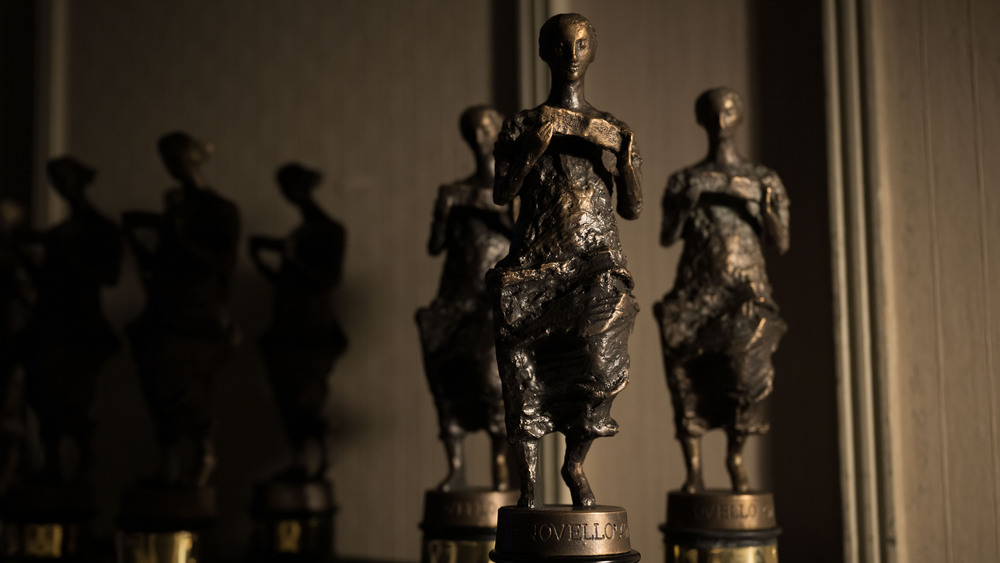
Such creative challenges are nothing new to Blair. The Scottish composer has written over 200 scores for film, TV and theatre, with his work appearing in productions for the BBC, ITV and Sky as well as the English National Ballet and the Royal Shakespeare Company. His soundtrack for the Russell T Davies-created 2023 drama Nolly earned him a BAFTA nomination and won Best TV Score at the Camille Awards 2024, while he frequently judges prestigious awards such as The Ivors and the British Independent Film Awards.
Such persistent acclaim and demand for his services is no coincidence. Not only, as Blair notes, has his education been critical to his success — he has a BA (Hons) in Music from Durham University and an MA in Composition for Film and Television from the University of Bristol — but so has his applicable experience, networking and savviness to a changing financial landscape for music creators. Reflecting on the origins of his career, Blair explains that he threw himself into whatever practical, extracurricular experience was on offer while at university. This often entailed writing the music for student theatre productions, from Dracula to Under Milk Wood.
‘It was probably at the expense of some of my essays!’ he adds. ‘But you get to work with actual musicians and learn how to write for specific instruments, which is useful for a career in composition. At university, you can do this for free and students will be excited to play your scores. But when you walk out the door [into professional composing], you have to start paying each other.’
It was these early years of practice, as well as Blair’s student network, that led to a first paid job: composing for theatre at the Wales Millennium Centre in Cardiff for a show called The Exquisite Corpse. He was recommended for the gig by a fellow Durham student: ‘It was a good lesson in that previous collaborations can result in follow-on work… and that throwing yourself into the deep end results in a “learn by doing” approach. You learn so much more than in a textbook.’
'If you can get the ideological cogs turning early, you’ll have a much better idea of how you can approach your score.'
Having gradually worked his way up the professional ladder following that Exquisite Corpse commission, Blair has amassed an impressive number of composing credits across a variety of mediums. Most recently, he composed the music for the BBC’s 2025 Christmas ghost story, The Room in the Tower, while his next major composing credit will be the upcoming second season of the ITV drama After The Flood.
While with ‘high-octane dramas you’re helping to heighten what is there,’ Blair says that the composing process differs when working on documentaries. The composer has worked on the music for such films as We Are Northern Lights, Becoming Hitchcock and The Age of Disclosure — the record-breaking 2025 documentary which claims there has been a government-level cover-up of alien life on earth.
‘With documentaries, you’re supporting what is there,’ Blair explains. ‘Because of the subject matter [of The Age of Disclosure] it was important that the music was sober… we [as composers] have a huge responsibility not to manipulate the subject matter.’ Rather than relying on typical sci-fi music tropes, Blair opted to write a traditional orchestral score. Dominated by piano and brass, it harked back to the Classical period of Mozart: ‘It was a timeless palette [of sound]… that can help the subject be taken seriously.'
'There’s no instance where a PRS writer should have to part with their writer’s share.'
As a PCAM committee member (The Society for Producers and Composers of Applied Music), Blair is passionate about preserving and protecting the rights of media composers, as well as ensuring that payments in the sector are prompt and fair. This particularly applies to the issue of buyouts, referring to when creators are paid a one-off fee by the commissioner for their work. Such a practice, as the Musicians’ Union point out, typically ‘prevents you from retaining some or all of your intellectual property rights in the work,’ while the commissioning party ‘acquires the creator’s rights and potential royalty income in respect of their work’.
'Because we PRS members assign our collection rights to PRS, we can’t give out our writer’s share as part of a buyout because it’s already been assigned to PRS,’ Blair explains. 'Writer's share, publishing and even the master recordings are more negotiable than some composers who are new to the industry might realise. On a lower-budget project where the fee is smaller, it may be justified for a composer to retain all of these rights.
'However, regardless of budget, there’s no instance where a PRS writer should have to part with their writer’s share, and I think it’s important that young media composers know this coming into the industry.’
As for the knock-on effect buyouts have on royalties, it’s little surprise that PRS for Music and The Ivors Academy have joined the MU in recent years in advocating against creators taking buyouts for their work.
‘We have to stick together [as creators] and make sure our rights are not being eroded away,’ Blair states. ‘If we don’t, then we’re at risk of having an industry that isn’t worth entering. Composers have to be able to sustain a living from their work.’

.ashx)